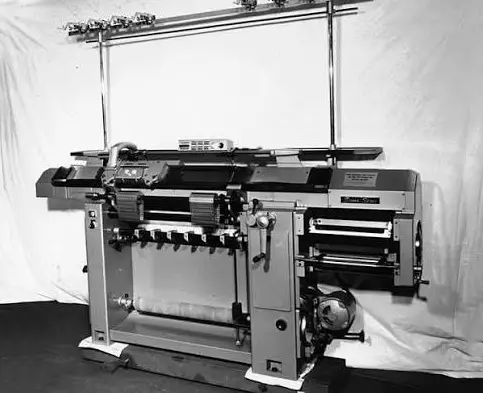
Textile manufacturers looking to expand or modernize their knitting production capacity face an increasingly complex decision when selecting equipment suppliers. Flat knitting machines vary considerably in capability, automation level, and build quality across different manufacturers, making thorough evaluation essential before committing to a significant equipment investment.
The Role of Flat Knitting Machines in Modern Textile Production
Flat knitting machines produce fabric panels with shaped edges directly during the knitting process, allowing manufacturers to create finished or near-finished garment components without the cutting and sewing steps required for fabric produced on circular knitting machines. This capability has made flat knitting technology particularly valuable for sweater production, technical knitwear, and increasingly for fully-fashioned garment manufacturing that minimizes fabric waste.
Key Factors in Manufacturer Evaluation
When comparing options from different flat knitting machine manufacturer candidates, gauge range flexibility stands out as an important consideration, since manufacturers producing a diverse product range benefit from machines capable of handling multiple gauge settings without requiring separate dedicated equipment for each fabric weight.
Needle bed quality and precision directly affect both fabric consistency and long-term machine reliability, since lower-quality needle beds tend to develop wear-related defects more quickly under continuous production use, leading to increased maintenance costs and potential fabric quality issues over the machine’s operational life.
Automation and Programming Capability
Modern flat knitting machines increasingly incorporate computerized controls that allow complex pattern programming, automated shaping, and reduced operator intervention during production runs. Manufacturers evaluating equipment should consider not just current production needs but anticipated future requirements for pattern complexity, since upgrading control software capability after purchase is often more limited than selecting appropriately capable equipment from the outset.
After-Sales Support and Technical Service
Knitting machines represent a long-term production investment, often remaining in service for well over a decade with proper maintenance. Manufacturer support in terms of spare parts availability, technical service responsiveness, and training for operating staff significantly affects how smoothly a facility can maintain consistent production once the equipment moves beyond its initial warranty period.
Energy Efficiency and Operating Costs
Beyond the initial purchase price, ongoing energy consumption represents a significant factor in the total cost of operating knitting equipment over its service life. Comparing energy efficiency specifications across manufacturers, particularly for facilities operating machines continuously across multiple shifts, can reveal meaningful differences in long-term operating costs that aren’t immediately apparent from equipment pricing alone.
See also: Health Service Research Portal Urinvägskollen Explaining Urinary Health Related Searches
Evaluating Manufacturer Track Record
Requesting references from existing clients operating similar production volumes, along with reviewing a manufacturer’s history of equipment reliability and support responsiveness, provides valuable insight that technical specifications alone cannot fully convey.
Conclusion
Selecting the right flat knitting machine manufacturer involves balancing technical capability, automation flexibility, and long-term support considerations against upfront investment cost. Textile manufacturers who invest time in thorough supplier evaluation typically see better long-term production outcomes than those who select equipment based primarily on initial price comparisons.
FAQs
Q1: What is gauge range flexibility and why does it matter? Gauge range refers to the fabric weights a machine can produce; greater flexibility allows manufacturers to produce a wider product range without needing separate dedicated machines.
Q2: How important is computerized programming capability in modern knitting machines? Very important for manufacturers producing complex patterns or fully-fashioned garments, since it reduces manual intervention and enables more sophisticated design capability.
Q3: What after-sales factors should I consider when choosing a manufacturer? Spare parts availability, technical service responsiveness, and operator training support all significantly affect long-term equipment reliability and production continuity.